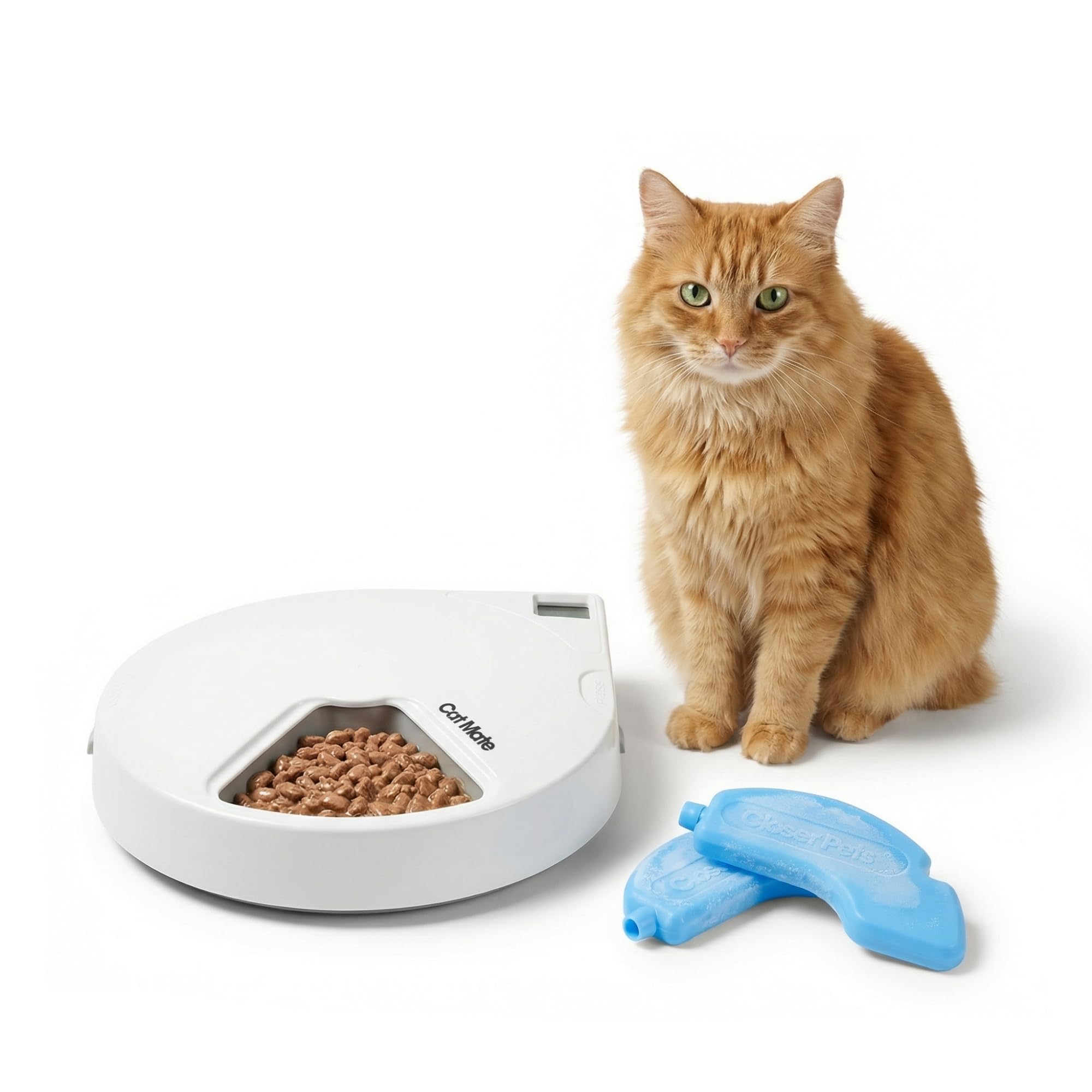
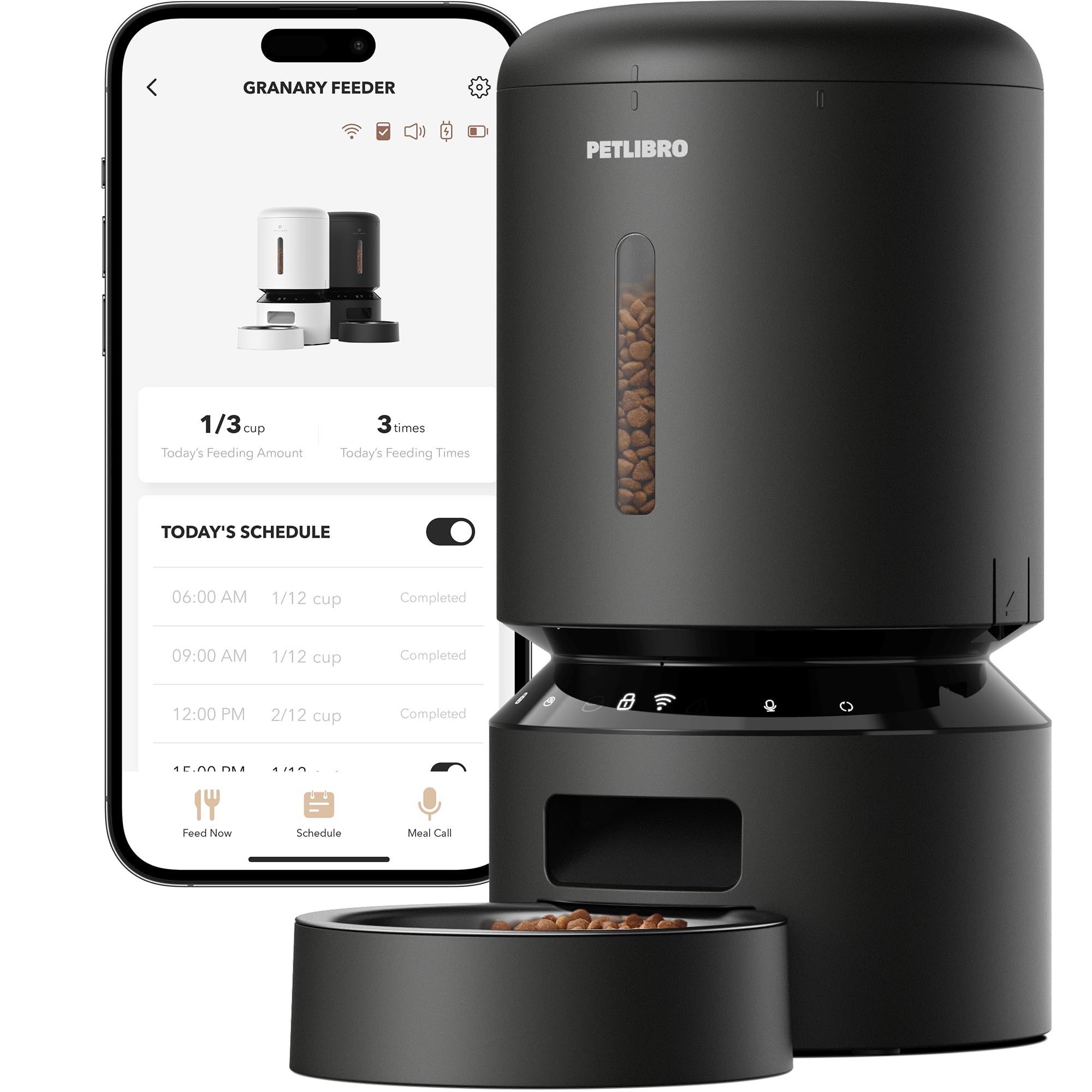
How to choose the right automatic cat feeder
A feeder only helps if it matches how your cat eats. Our guide to indoor cat enrichment explains why vets like small, frequent meals, and how much water a cat should drink covers the other half of the bowl.
Start with how many cats eat from the feeder. The AAFP/ISFM guidelines say every cat should have its own separate feeding station, with food kept apart from water (AAFP/ISFM). A microchip or RFID feeder is one way to stop a shared feeder from becoming a shared bowl, so read that column and the maker's notes on how each cat is recognized. Weight matters as well: APOP's 2022 survey found that 61% of cats evaluated by US veterinary professionals were overweight or obese (APOP). That makes the minimum portion and meals-per-day columns as important as capacity.
Portion control and meals per day
Check the meals per day and the smallest portion the feeder can drop. The AAFP/ISFM guidelines recommend timed and puzzle feeders to promote small, frequent meals (AAFP/ISFM). A feeder that offers only a few large meals does less for that goal. Ask your vet how much your cat should eat, then set the portion to match. Our enrichment guide covers feeders as one of five pillars.
Power backup
Look for a feeder with a battery backup in addition to its plug, and check what the maker says about how long the battery lasts. If a model runs on batteries alone, find out how often you must change them and what the low-battery warning looks like.
Jam resistance for your kibble size
Read the listing for the kibble sizes the maker supports and compare them with the food you feed. A feeder that jams leaves your cat hungry. Check whether the dispenser comes apart for cleaning, and whether the maker warns against certain foods, such as treats or semi-moist food.
App and alerts
Apps are useful when you travel. Check whether the feeder still dispenses on its schedule if Wi-Fi drops, and whether the app requires an account. Alerts for a jam or low food are the feature that matters most when you are away from home.
Microchip or RFID access
The AAFP/ISFM guidelines say every cat should have its own feeding station (AAFP/ISFM). A microchip or tag-reading feeder helps you meet that in a shared home, since it opens for one cat at a time. Check how it recognizes your cat and what happens if a tag is lost.
Dishwasher-safe bowl
Check whether the bowl and the dispenser parts are dishwasher safe, according to the maker. A removable bowl makes daily cleaning a quick job. Follow the maker's cleaning instructions, since some parts cannot go in the dishwasher.