We compared manufacturer specs, manuals and warranty terms. We have not hands-on tested these products yet. How we research
We may earn a commission when you buy through links on this page. As an Amazon Associate I earn from qualifying purchases. How we make money
A self-cleaning litter box sifts or rakes waste into a drawer so you scoop less often. The decisions that matter are the minimum cat weight the sensors accept, whether your cat fits through the opening, and what the machine costs to keep running. This page is for owners of adult cats, multi-cat homes and anyone replacing a box that no longer keeps up.
We compared 5 self-cleaning litter boxes and picked 5.
Our picks at a glance
1
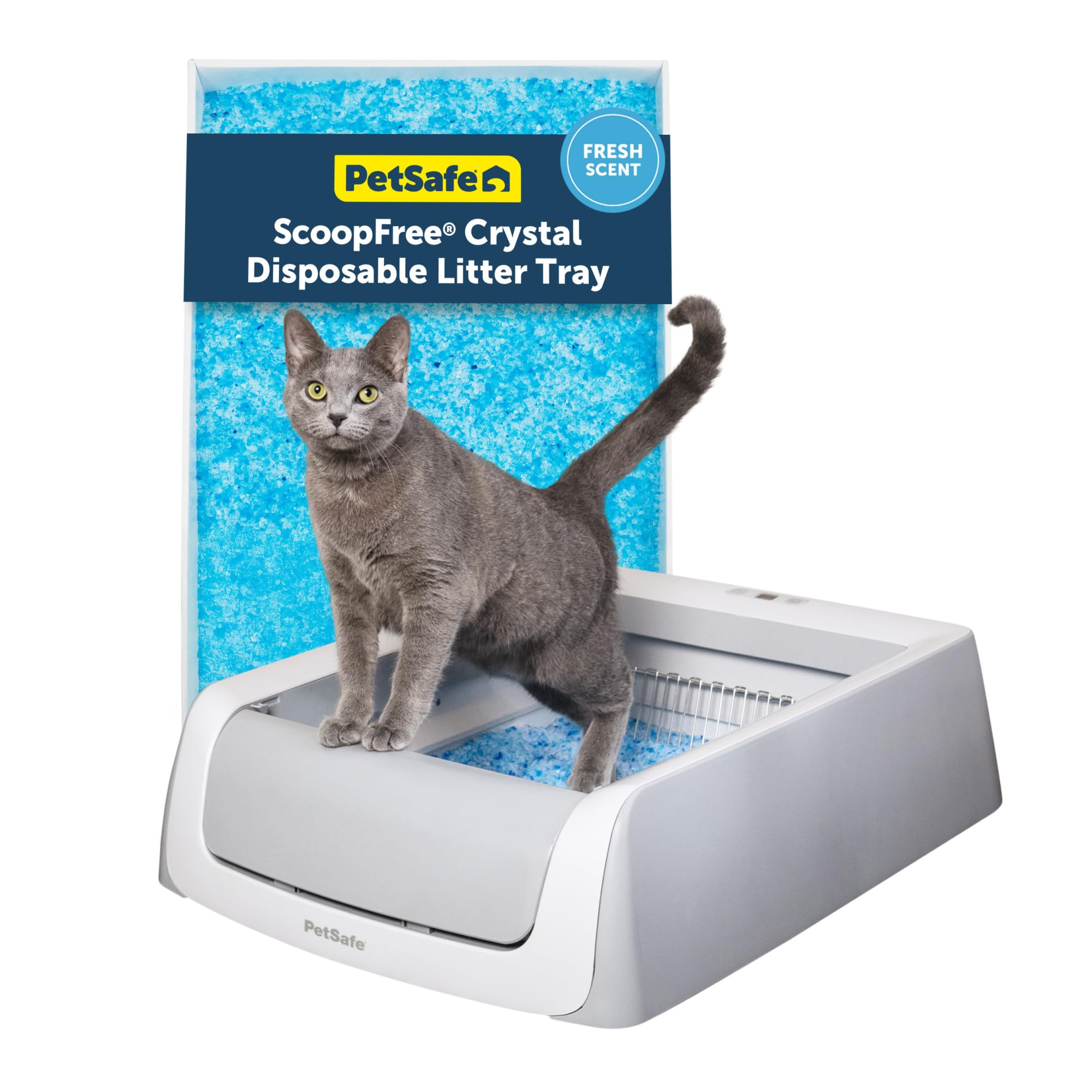
Best overallWhisker Litter-Robot 4A rotating globe that sifts waste after each visit and logs cat weights and visits in its app.
Currently unavailable on Amazon
2
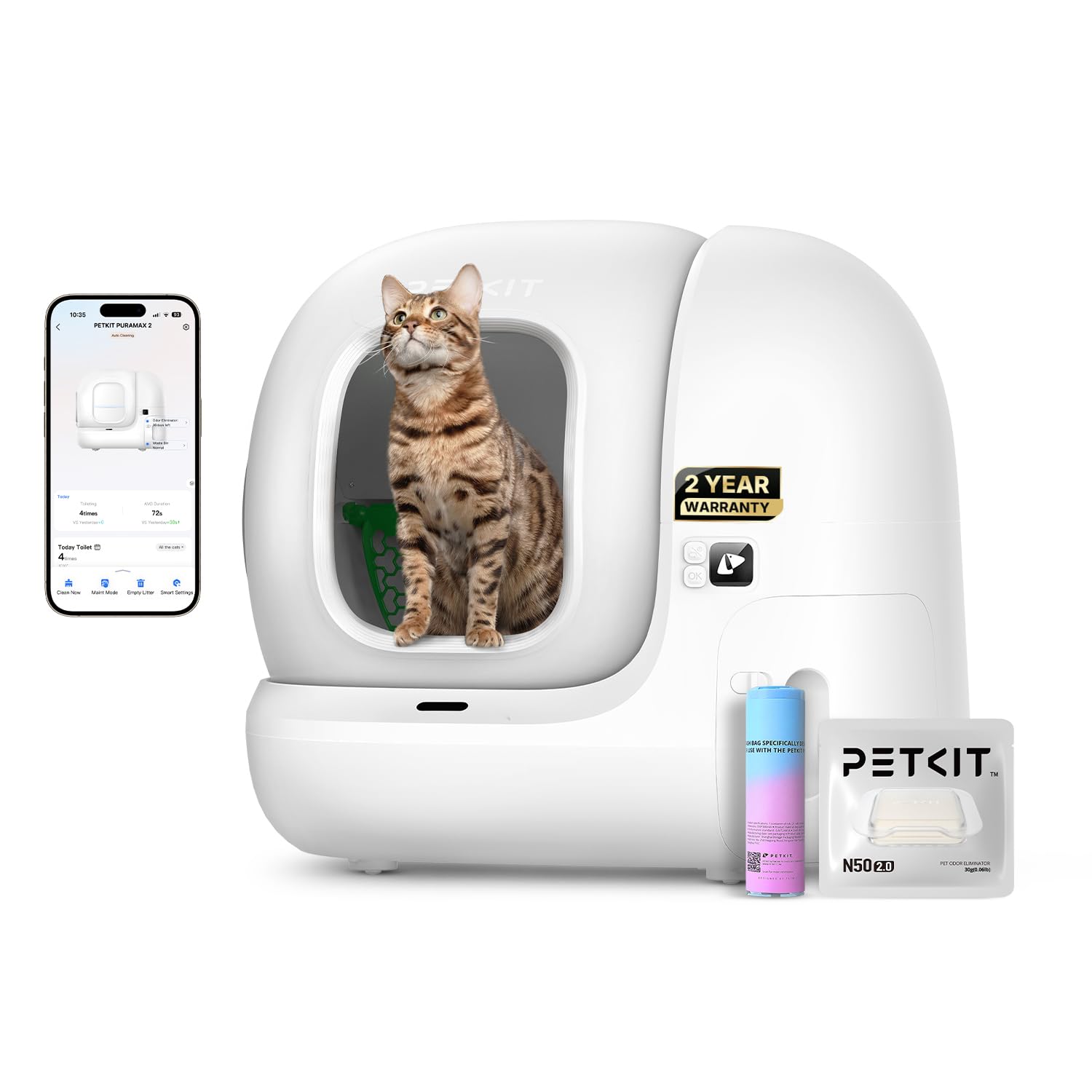
Best valuePETKIT PuraMax 2A closed automatic box with app control and odor features for well under Litter-Robot money.
Currently unavailable on Amazon
3
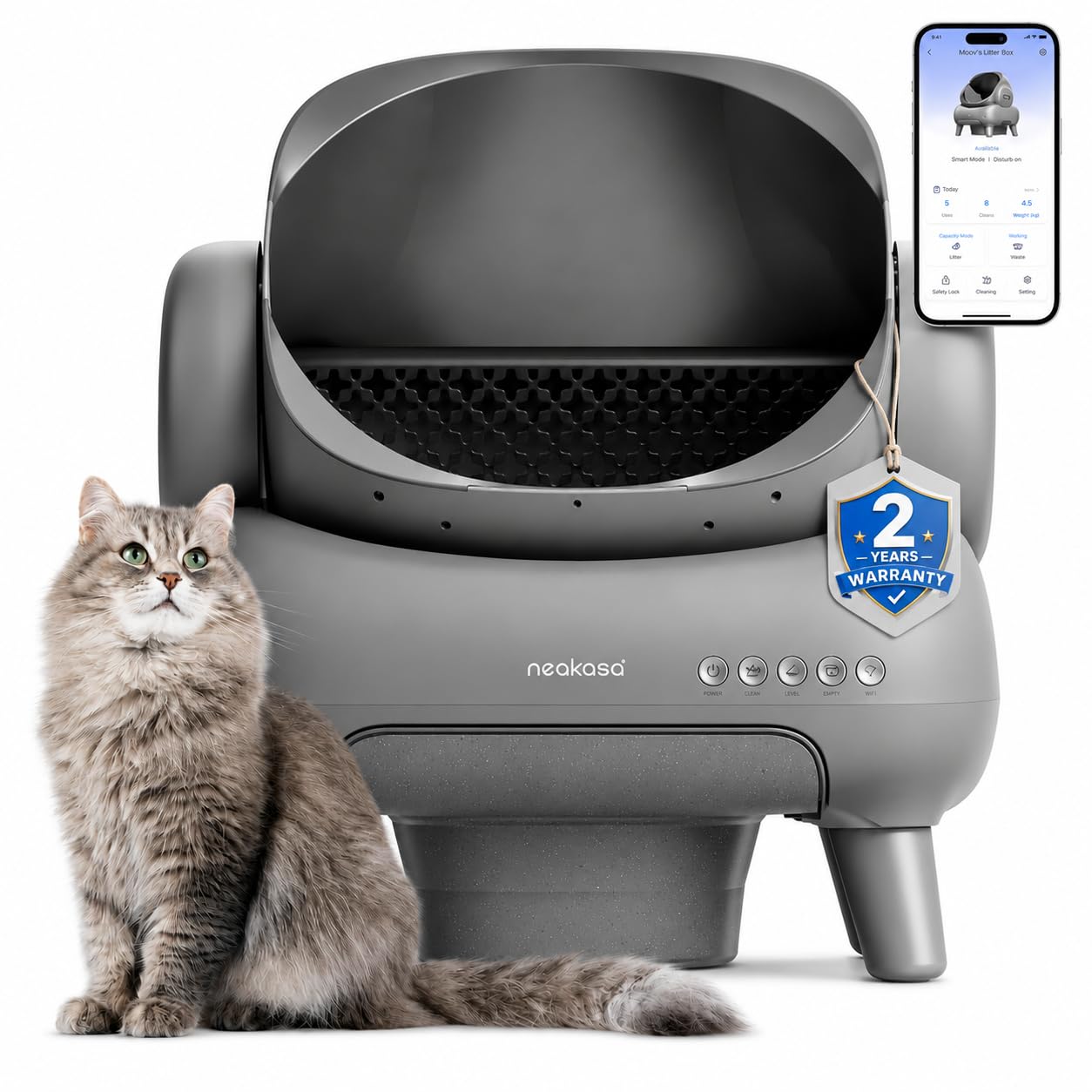
★ Start hereBest open-topNeakasa M1 PlusAn open-top automatic box that suits large or nervous cats that avoid enclosed boxes.
$352.90Price as of Nov 24, 2026, 7:34 PM ET. Details
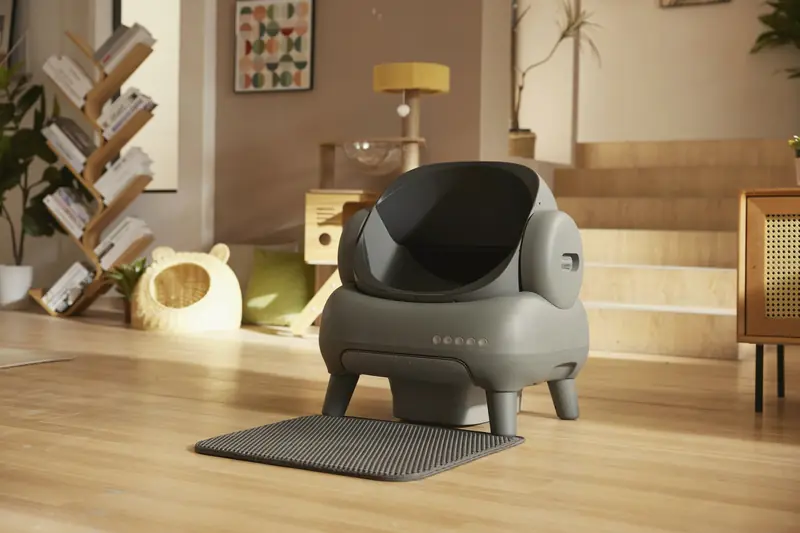
Best easy-access entryCumrige Self-Cleaning Litter Box (QQ-A)An app-controlled self-cleaning litter box with an entry step for older cats, a detachable waste tray and two rolls of waste bags in the box.
$119.99Price as of Nov 25, 2026, 7:00 PM ET. Details
Self-cleaning boxes look alike in photos, so the spec table does the sorting. If you are still deciding whether to buy one at all, read self-cleaning vs regular litter box. If a cat is already avoiding its box, start with our litter box setup guide.
Minimum cat weight and sensor safety
Check the minimum cat weight in the spec table before you buy for a kitten or a small adult. Sensor-based boxes only run safely above the weight the maker states, and some makers suggest a manual or semi-automatic mode until a kitten is heavier. Read the maker's manual for that mode, and see our litter box setup guide for the weight example we cite. Also check the maximum weight if you have a large cat.
Interior size and entry height
Compare the footprint and the entry height columns. A big cat needs room to turn around, and an older cat may avoid a high step-over. Measure your space as well: many self-cleaning boxes are far larger than a plain pan. Open-top models suit cats that dislike enclosed spaces, which matches the ASPCA preference for uncovered boxes.
Waste drawer capacity
The drawer figure is the maker's estimate, so treat it as a guide. Your own number depends on how many cats use the box. Bagged or liner-based drawers add an ongoing cost. Emptying is still a task: ASPCA advises washing the box weekly and fully replacing the litter (ASPCA), so plan to do both whatever the box does for you.
Litter type it needs
Check the litter type column. A box that takes ordinary clumping litter gives you a choice of brands and lets you follow what your cat likes; ASPCA says cats generally prefer unscented, clumping litter with a medium-to-fine texture (ASPCA). A box that needs one litter locks you in. Our clumping vs non-clumping guide explains why that matters.
Noise and app features
Read the listing for any noise figure the maker states, and remember it is a maker claim. Apps can alert you when the drawer is full or the cat visits more often than usual. Check whether the box still runs from its own buttons if Wi-Fi drops, and whether the app needs an account.
Ongoing costs
Add up what the box needs over a year: replacement trays or liners, filters, charcoal pads and the litter itself. The spec table shows whether the box needs proprietary consumables. A cheaper box with expensive refills can cost more than a pricier one that takes ordinary litter. Our comparison of self-cleaning and regular boxes walks through the trade-offs.
Tips for using your self-cleaning litter box
Keep one box per cat plus one extra, even if each box is self-cleaning. See the litter box setup guide for placement.
Check the maker's weight limits for kittens before you switch a young cat to an automatic box. We explain the example in the setup guide.
Look at your cat's habits for a few days after you switch. If it stops using the box, rule out a medical cause with your vet before blaming the machine.
FAQ
Are self-cleaning litter boxes safe for kittens?
Check the maker's minimum weight. One maker's FAQ states that its scale does not recognize cats under 3 lb (1.3 kg) and advises using semi-automatic mode until the kitten is heavier (Litter-Robot FAQ). Your vet can tell you when a kitten is ready.
Do I still need more than one box?
Yes. ASPCA advises one box per cat plus one extra, whatever the type of box (ASPCA).
Do self-cleaning boxes still need cleaning?
Yes. ASPCA advises washing the box weekly and fully replacing the litter (ASPCA), so follow the maker's schedule for trays and drawers as well.
My cat stopped using the box. Is it the machine?
Rule out medical causes first. ASPCA lists urinary tract infection, interstitial cystitis and stones (ASPCA), and Cornell says a urinary blockage is an emergency (Cornell Feline Health Center). Call your vet.
Box count, placement, litter depth and cleaning schedule from ASPCA and Cornell.
Purrsuaded
The Cat-Ready Home Checklist
One litter box per cat plus one extra, in quiet spots away from food.
Unscented clumping litter, 1-2 inches deep, with no lid or liner.
Fresh water in several places; the daily target is about 4 ounces per 5 pounds of lean body weight.
A separate feeding station for each cat.
purrsuaded.com
Get the Cat-Ready Home Checklist
A printable checklist built on AAFP, ASPCA, Cornell and FDA guidance, from how many litter boxes you need to which flowers to keep out. Free, and sized for the fridge door.